ALAKE SHILLING
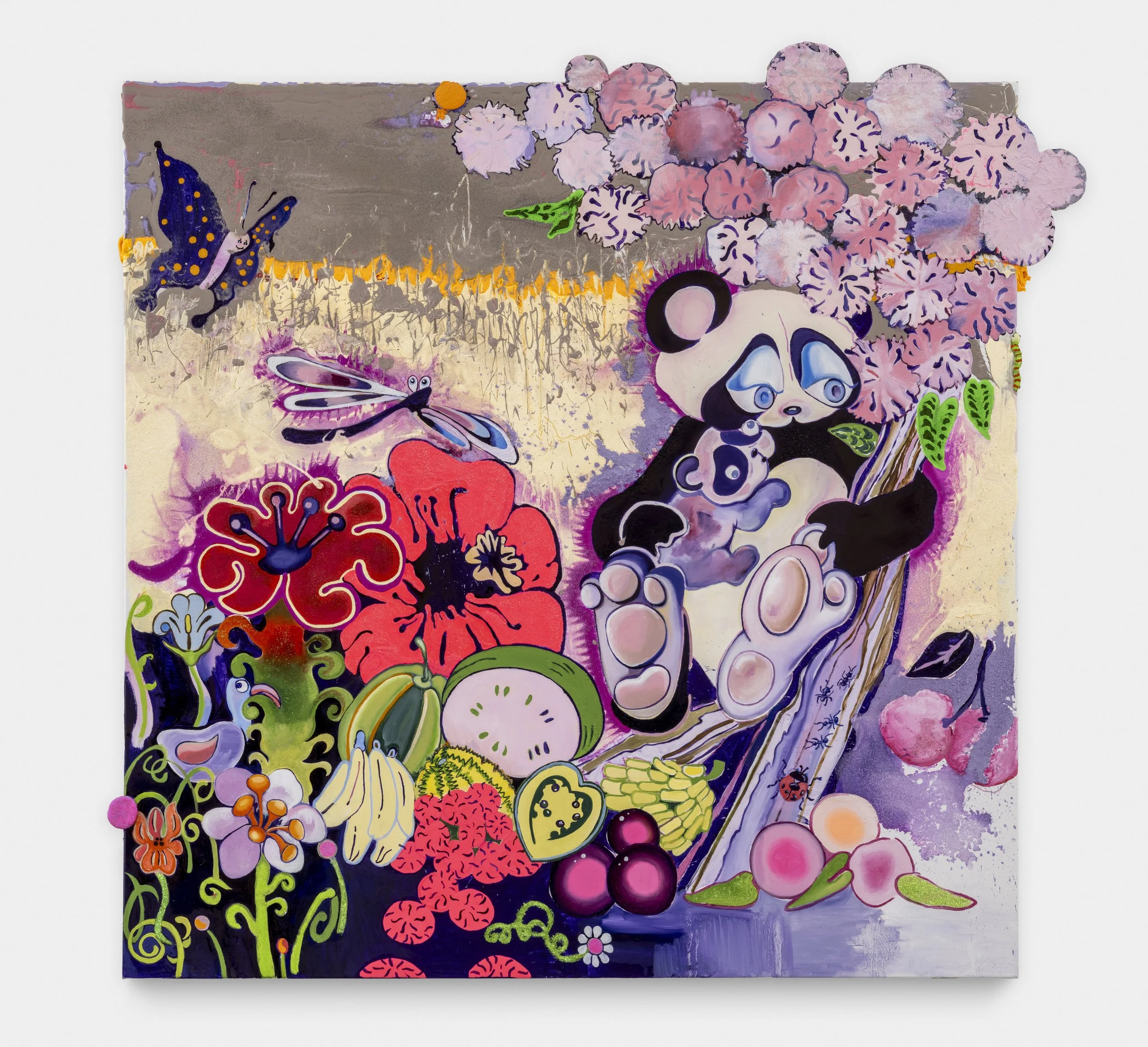
Mama Bub and Baby Kiss
On a gorgeous blue sky morning in downtown Los Angeles, I sat with Los Angeles native Alake Shilling days after the Hammer’s Made in LA opening. She’s totally in her zone inside a large ceramics studio, working on cool unique-looking Disney inspired mugs to fill an upcoming order for a friend’s shop in Tokyo. Digging the way they came out, she wonders if she’ll make any more. Alake’s ceramic work is incredibly amusing; it’s as if I’ve been welcomed inside her cartoon menagerie. She’s channeled something extraordinary into her artwork and it’s nearly impossible not to get drawn in to her whimsical world. Using vivid color, rich texture, abstraction and anthropomorphic expression, Alake invites the viewer to lock eyes with her subjects and share their feelings. Processing her own life experiences, it’s as if the medium came alive and found her hands to work it all out. Through this irresistible universe of fun, Alake’s come to life in the art world along with her characters.
Alake’s is a featured artist in the 2025 Made in LA exhibit at the Hammer Museum in Los Angeles and she has recently shown solo exhibitions at the Palm Springs Art Museum and Deitch in Los Angeles. She’s been a part of group exhibitions at Sargent’s Daughters in New York, Somerset House in London and at Charlie James Gallery. I couldn’t be more delighted to spend a morning with her observing her work and getting to know more about her process and just how sweet she is.
TRINA: It feels like you’ve transcended your youth in your art. How did you make that connection?
ALAKE: That's so funny, I was just thinking about my life, my youth growing up, and I am starting to feel a little self-conscious about the youthful nature of my work the older I get, and the more people are looking at my work and getting to know me.
To answer your question, my childhood was very good. I had a really comfortable and fun childhood. My mother was young when she had me. Well, I consider it young. She was 23. I'm 32 right now and I still feel like having a child would be overwhelming. She had such a different upbringing than me. She focused on creating safety and comfort, that was her main goal as a parent, and acceptance. Although she was young and still was on her journey of discovering who she was and understanding how she grew up and the tradition she was in, I think she did a good job of creating special memories for me. I've always been offbeat. Even as a child you could tell I was strange, but she's always been so accepting of me and never put pressure, like, ‘You have to do this, why you talk like this.’ She never made me feel like who I was was strange.
And with art too, she's always been very, ‘You want to be an artist, that’s great.’ A lot of people's families don't understand why they want to pursue art unless they come from a family of artists. Maybe they won't discourage them, but they're like, ‘If you can make a living, that's fine,’ but I don't get it. That was not the relationship we have. She said, ‘Your art is great. You have real talent.’ That's always something I've heard from her, and it gave me such good self-esteem with art.
I love comfort. I feel like life is so uncomfortable. That's kind of why I like whimsical things because my childhood was comfortable. It makes me feel comfortable and safe, and as an adult I feel uncomfortable most of the time. Art the only thing that I have done in my life that is fairly easy. I never learned how to drive. I never graduated college. I can't keep a partner. It took me 10 years to find my own apartment. I lost my ID and never got a new one. It’s the everyday things that most people do, like they get married, they have kids…
TRINA: …Like the “normal” things.
ALAKE: Yeah. I can't do them, but I could do art and it's the only thing that makes me feel like I'm normal, like I could do something, I'm not a total fuddy duddy. That's mainly why I lean toward whimsical things, because it's safe for me. It makes me feel comfortable.

Mister Spitz, 2021
TRINA: You were initially super interested in animation and drawing. What attracted you to oil painting and then ceramics?
ALAKE: That's true. I forgot to mention that. That is also another reason I like whimsical things because I’m really drawn to animation. I love cartoons, I love comics. I love the collector culture, and the animator's world. I like the language, I like the shapes, I like the storytelling aspect. I thought maybe I'd be a children's book illustrator or an animator growing up because I didn't think fine art, it was so elusive and mysterious, that I didn't think of it as a career path. Initially I wanted to be an animator, and so I took a lot of classes as a kid, like animation schools and residencies and it was really fun, but I found out that I don't like the process. I don't really like the tedious process of animating and the most coded jobs like character design, which I'm interested in, are very competitive.
I don't really like the competitive nature of animation, and most people are just cogs in a wheel. They don't get to express their own vision. That's what led me to fine art, is there are no rules. And with illustration, design and animation, there are a lot of rules. There are a lot of things you can't get around. You have to do it this way, if you don't do it this way, you won't get hired. With fine art, you can make your own rules. So, I was like, I’ll just be my own character designer, make my own world, do what I want. If I do experimental animation and fine art, I could do that. I don't have to make a show for a network and then they approve it, and they change my ideas and things like that. That's really where that came from.
TRINA: Freedom.
ALAKE: Yeah. Freedom.
TRINA: I understand that. Have you always been into Disney, do you love Mickey?
ALAKE: I mean, I had a connection with Mickey Mouse growing up, and I liked a few Disney movies, but I wasn’t like I had to go to Disneyland. It was only recently when I discovered it’s a good universal equalizer. I don’t have to think about anyone’s background, I don’t have to think about race, class, gender. Everyone knows who Mickey is. Everyone has their own experience with Mickey, and everybody is the same with Mickey. Even though animation has such a racist sexist background origin, it’s very ironic that Walt Disney is the great equalizer between black and white, man and woman. It’s funny to me but it’s the only thing that makes everybody equal. I feel like when I make Disney and cartoon characters, I’m not a woman, I’m not black, I’m not poor, I’m not this, I’m not that. I’m just an artist and everybody can relate to it.
We have a lot of art that you have to think about, and I appreciate that art. It has a lot of symbolism and political topic but to me that’s just everyday life, I don’t want to think about that when I’m being creative. I want to think about fun stuff and whimsical stuff. Of course, my own experience is laced in there, but I want to feel like everybody else. Disney makes me feel like I’m not different.
TRINA: Aww, I love that. So, you were drawing, and you were doing animation and then you found oil painting, which was an incredible turn for your work.
ALAKE: I just loved it. I went to a fine art residency in high school called Ox-Bow. It was for teenagers to really indoctrinate them into fine art and help them understand what the world is, like studio practice, how you maintain it, how you do research, what are studio visits like, and we talked about art colleges because in high school, they want you to go to college, but they don't discuss specialty schools, they don't discuss craft schools, they don't discuss art school. In this program, they discuss all that. They discuss different routes you could take. It was just like full throttle art, but it helped people decide, ‘Is art something I want to do for a living or want to do as a hobby?’ Because you could like art, but you might not want to do it for your life, to make money. That school really helped people discover that because you might have an idea about what it takes to be a firefighter or a doctor and a lawyer, but you don't know what it takes to be a fine artist. It's such a mystery.
TRINA: Did you feel like you knew you had what it takes?
ALAKE: No, I didn't. And when I think back now of what I thought when I was in high school and college, I was like, wow, I was way off. I didn't even know then, even though I was like, okay, this is what I'm going to do. I didn't even know then what I was getting into, but I just felt that even if I can't do it as a living, I have to try. But I knew I'd always do it even as a hobby, but I was just like, I don't have any other interests really. I have to do something creative, or I don't know what I'm going do.

Big Butterfly is Watching
TRINA: Right, totally. You were like, this is it. Art is life.
ALAKE: Yes.
TRINA: I read that you loved oil painting partly because you loved the idea of the gems and the minerals that make the colors.
ALAKE: Exactly. Oh, that's why I really brought up the school Ox-Bow. The first class I took there was an oil painting class, and they gave me all the tips and tricks that you need. It was just like full on oil painting. We didn't even do acrylics or watercolors. They just did oil and I loved it. I took right to it. I got it right away. I love the rich history of it. I love that like you said, it combines the natural elements of the earth. I love how rich it looks.
That's one thing about Western culture; I feel that the cute animated things in life are cheap. They're very cheap. I want it them to look like rich quality. I want my work to involve the luxurious decadent parts of life, even though it's childlike. I wanted the materials to be really sophisticated. That's also why I like oil because I feel like acrylic is great, but it's plastic. I'm already doing something that could probably be equated to a plastic, something with no substance so I want the materials to have substance.
TRINA: I love the decadence. Where do you think that came from? This love of sophisticated as a style? I’m thinking about your mom a little too because she carries a sophistication, doesn't she? (I know Alake’s mom on a professional basis and sometimes I hear Jazz coming from her office…)
ALAKE: Yeah, she has good taste. She loves quality things. I think that's something she instilled in me. Quality. She's always nitpicking over leather. I know leather is not good. People are against animal products, but she didn't grow up in that time, per se. When we go shopping, she's so picky about leather. I learned, she's like, ‘I don't like the cobblestone leather, this leather is too rough, this is very rare’ and even if it's designer, she's like, ‘It's just so cheap. It costs a lot of money, but the materials aren't good.’ I did grow up with a mother who's very focused on quality materials.
TRINA: Quality is good, I think. It lasts.
ALAKE: You want to buy something; you want to keep it forever. I love that idea. I didn't grow up in a time where you could buy something that lasts. I grew up in Ikea time where things just fall right apart, and I feel like I might have romanticized it. Even making something yourself that you know is good quality. That's the world I want to live in.
TRINA: Amen, sister, I'm with you on that. Seeing your paintings in person is incredible, and they’re totally sculptural. How did that happen? Why did you start building out?
ALAKE: It's so funny because I had such a narrow-minded view of art when I was discovering it. I literally knew very little about fine art and the only thing I liked was painting and drawing. I didn’t get sculpture or photography or any other type of art; I didn't get why it existed.
As I started painting more and I learned about oil painting, how thick and thin you could get in and the things you could mix into it, marble powder and cold wax and things like that, and how sculptural it could be and how much it looked like rocks and nature the more you build it up, I was like, hmm. I felt very drawn to it. I have liked textures naturally ever since I was a child. Some kids have, I don't know what you call it, a sensory thing where they like certain fabrics more than others, and I was really into touching soft things. I had to rub something soft if I was going to try to fall asleep.

Buggy Bear is Out of Control, 2019
TRINA: I know somebody like that, a friend who used to always carry a small piece of satin around with her.
ALAKE: It's very common actually. I didn't know that, but I'm just obsessed with texture. Even now, I have to imagine myself rubbing something soft like a cat or something to feel relaxed, but I don't have a cat, or I don't have access to something that gives me that feeling of calm.
TRINA: That softness.
ALAKE: It's just so comforting. I love textures. I feel like oil paint lends itself to texture. But now I’ve come to the conclusion that I think I'm naturally a sculptor at heart. I just had access to painting and that's mostly what I learned about. I didn't take any sculpture classes. I didn't learn anything about sculpture until recently. I think naturally that's really what I am inside. That just came out in my paintings, which had to be a journey. I didn't realize that was what I was doing was trying to get into sculpture until I started working with ceramic. I was like, oh, okay, I think this is really what I am.
TRINA: Who brought you in? How did you start working with ceramics?
ALAKE: Oh, it's a good story. This is what I mean by my path in art has been very easy because the door just opened. I started an internship downtown at a gallery called 3 5 6 Mission. It's closed now. But Laura Owens, she has a studio downtown and as a part of her studio, she bought the next space over, rented it and turned it into gallery to show her work, just to have her own little gallery to have that relationship with her work out of her studio before it went out into the world.
She was like, ‘I'm going to turn this into a real gallery,’ where other artists could show work and just uplift her community and group of friends. I started interning there and she has a really big space. Well, she's very famous, so she has a whole top floor for painting, then she has an outdoor kiln and ceramic space. Once a week she'd open it to friends of the gallery to use it for free and that's how I started. It was just so random. I got an email one day inviting me to Clay Day and I thought it was a mistake. I thought that the people at the gallery accidentally put me on an email list.
I just went anyway, and they were like, ‘Oh, glad you came. We thought you might enjoy this.’ I didn't work on ceramics before that. Then I became the person who ran the program after working there. It all came together so effortlessly. I literally didn't have to do anything. I worked in the gallery and the doors started opening.
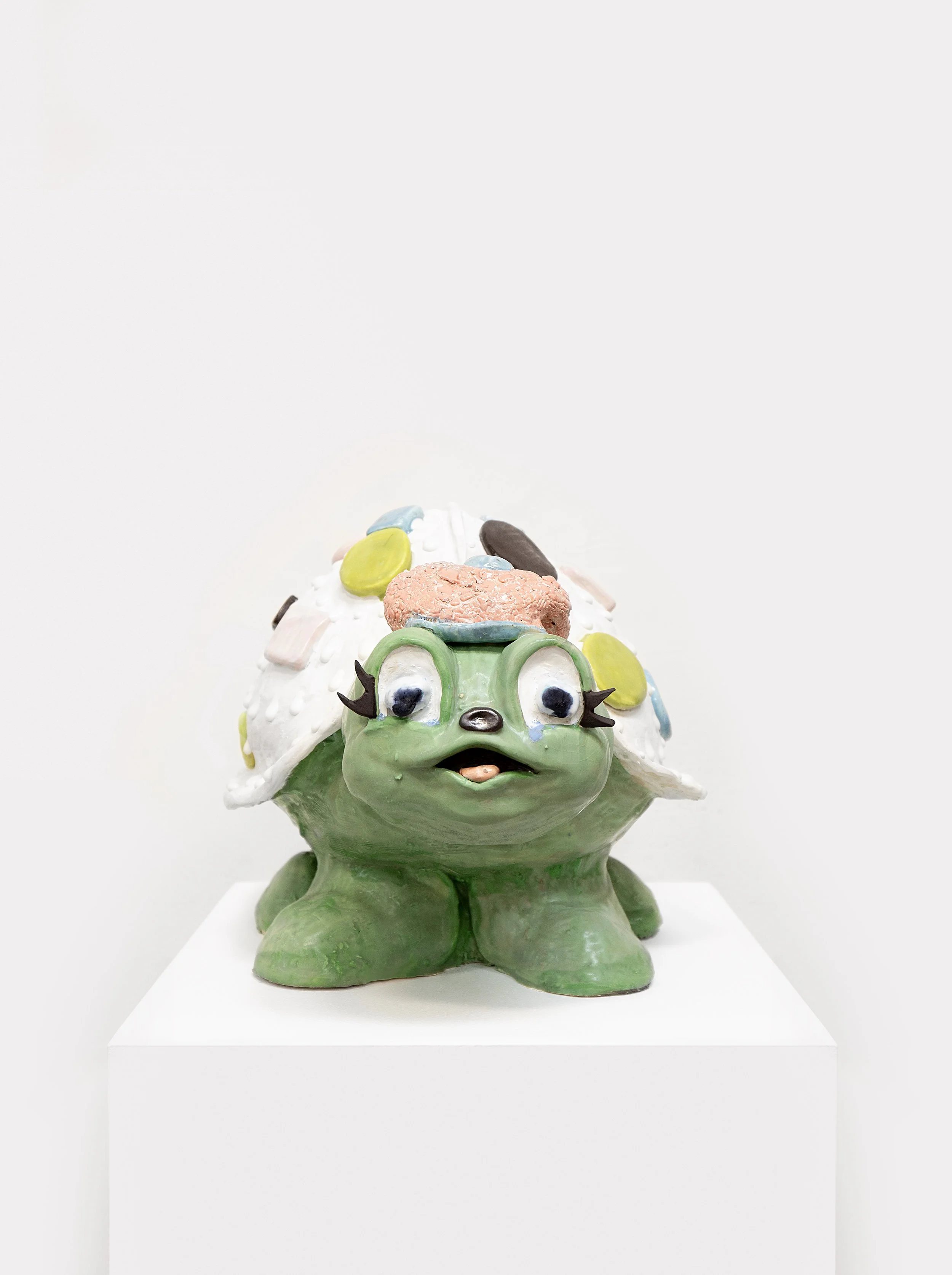
Artist Reimagined as Turtle Bug
TRINA: What was it like? What happened spiritually or physically for you when you started working with clay?
ALAKE: It just started talking. My hands just started…Sometimes it's so hard to come up with ideas, feel inspired and get started on a project, but with all the materials there and everything I needed at my fingertips, it just started. I know how rare it is to get a studio space for free and all of the supplies you need for free. It's like almost non-existent; it just doesn't happen. I was just feeling so inspired to have this space that I was like, I got to make something. I don't care what I make.
The people also there in clay, it was like five people, it wasn't a lot of people, they were very interested in what I was making. I was just messing around, and they were like, ‘There's a new kid on the block.’ They took it very seriously. I felt encouraged by that because it's hard to impress other artists. They're very critical and I get it, for good reason. But the fact that this group of artists I didn't know were so encouraging and we’re like, ‘We love your work.’ It was kind of like a cool kids click of up-and-coming artists. Now, some of them are famous, but the fact that I only did a few pieces, and they were like, ‘Yeah, keep going.’ I was like, yeah, I had so many ideas. And I met other artists, and they were like, ‘Oh, I think you'll like this artist.’ That's where I learned about Magdalena Frimkess and after I learned about her, that's when it really took off and I was like, now I know what I'm going to do. Now I know.
TRINA: Amazing. With this intuition, what did you make first?
ALAKE: I made little pinch pots that were pretty similar to this.
She points out her Minnie Mouse mug which is intricate while being built up from a pinch pot.
ALAKE: Like a little duck pot. A little pot with flowers. I was making tiles because ultimately, I love mosaics, and I was wanting to do a mosaic piece. I didn't know how, but I was like, I'll just experiment with tiles and put flowers on them, and I made a little dog sculpture. It's pretty much the same thing but just didn't have a direction of what I wanted, and I didn't know where it could go.
But just getting started, I made like tiny things. I made a dog because a friend asked me to, it wasn't really my idea to do animal sculptures, that didn't occur to me. I was just like, yeah, I'm making little pots, little pinch pots. There was an artist there, her name is Cassie, and she was like, ‘You need to really push yourself. You need to make bigger things. You need to make sculptures.’ I did what she told me to do, and it really worked for me.
TRINA: You're balancing a bit of abstraction with these figures. How does that come into play in your process?
ALAKE: Oh, yes. I love abstraction and that’s such a good observation that I didn't hear many people say before. But yeah, I do want it to be a mixture of abstraction and figurative work. I think someday I might leave the figurative characters behind and go totally into abstract work because, I really love Op art, and there's a lot of abstract paintings that I find very interesting.
I like the idea of reality, how it melts into something that you don't understand. I'm always questioning my own reality, my memories. I don't remember people, I don't remember scenarios exactly how they happened. Sometimes I'll go over things with people and they're like, ‘That's not the person that was there.’I'm constructing alternate versions of what happened and sometimes it scares me. Sometimes I don't remember people at all, teachers I've had through ninth grade, through 12th grade. I don't remember if I saw them today walking down the street, I wouldn't know who they are. There are parts of my life that I've reconstructed and don't remember, and I find that very fascinating and I guess that's how I try to combine that in my work. [An] everything is not what you think it is kind of idea. Plus, I love colors and shapes, and I love the wonky wobby sobby side of the crooked smile. So fascinated. It's a lot of different elements that lead me to that abstract theme you're seeing.
TRINA: I’m fascinated with the way you're bringing different feelings into all your characters. They're speaking to us. They're coming to life. How did you evolve this personification of feelings? Was it something you were consciously doing?
ALAKE: Dang, it's not even conscious. I just realized really this last few years that my work is all about feeling. That's all it's about. And being a fine artist kind of feels like writing a diary with invisible ink. You don't know what you're writing until years later the ink starts forming into letters and words you understand. It is really a personal journey. I wasn't very expressive of how I felt growing up. I kept a lot of things inside. Through art, I feel like I can really be honest about how I feel with the characters.
I just didn't like reality. I wanted to build my own world where I could be totally authentic and not feel judged because sometimes when you say how you feel, people really take it personally, and that scares me. I'm not trying to hurt you. I'm just trying to say what I feel, and I just don't feel free. I don't feel free a lot of times to really express myself. I guess through my buggy bear, I am seeing how I feel through the characters and how I perceive the world through the characters, and they listen to me. They talk back to me, and I really needed those characters to support me emotionally.
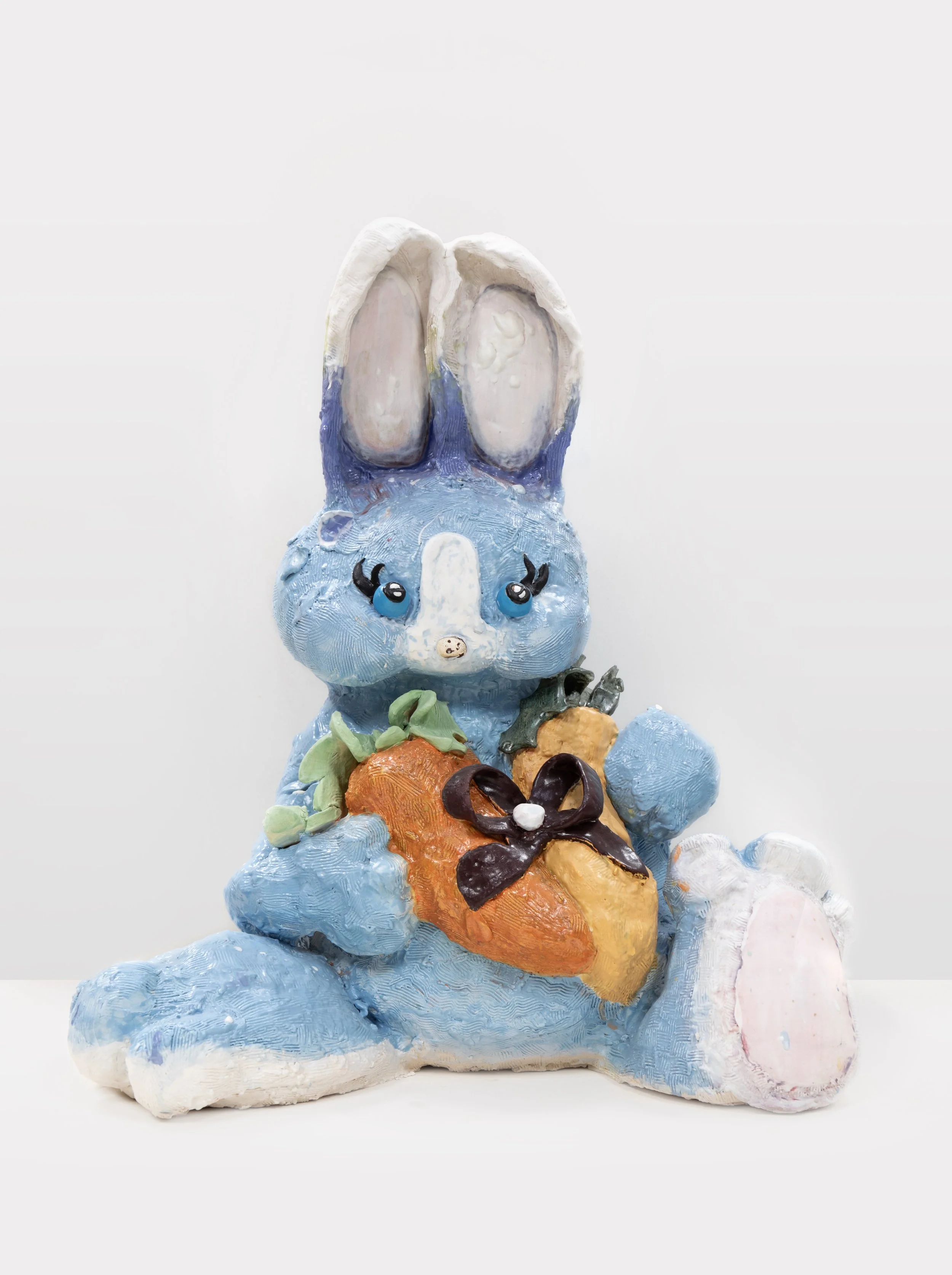
I’m A Bunny and I Carrot A Lot
TRINA: That’s art! Do you have a philosophy about the way you get into creating? Do you do a lot of prep work or research before making a piece? What's that process like?
ALAKE: I think an artist is only as good as their research. If you don't research as an artist, can you call yourself an artist? I don't know. That's a big secret. I feel like people think creative people just pull ideas out other butt. But no, every good artist is referencing something. You might not know what they're referencing, but it's coming from somewhere. It's like mold. It grows from something, but it's totally new and different. It's like you don't even want to create an original idea because what does that mean? That's what you are engaging with art based on a whole plethora of things. Like if you are seeing an original isolated experience, you can't relate to it. That doesn't make any sense.
When I hear people critique art, like, this is something I've seen a million times. Well, that's the point. That's the point. Really what you're looking at is something through someone else's eyes, their perspective. But you have to know stuff. You have to read and have ideas, and all I do is read. Everything I do, I feel is research. When I'm watching TV, I love to rewind, pause it, take pictures. I take pictures of things on the streets. There are signs and colors and anything interesting. I have so many pictures that I have saved on my computer and phone because I don't feel inspired unless I do research.
I always feel like I'm on such a strict deadline that I don't even get to do the extent of what I want for my research. I would like to do a full color sketch, a color palette, and a few different versions of ideas before I make an actual painting. But I don't always do that. I need to get a real organized studio practice. Sometimes I just start because I feel pressured to get work done, but I would like to be more thoughtful and take more time to really think. I don't even think I scratched the surface of what I could do as an artist and if I had the time and space, I think I’d be really good. But yeah, research is very important.
TRINA: I see a connection to a lot of the pop art I loved when I was a kiddo in the eighties. I collected Lisa Frank stickers and I heard you like Lisa Frank too!
ALAKE: Heck yeah!
TRINA: How did you find Lisa Frank?
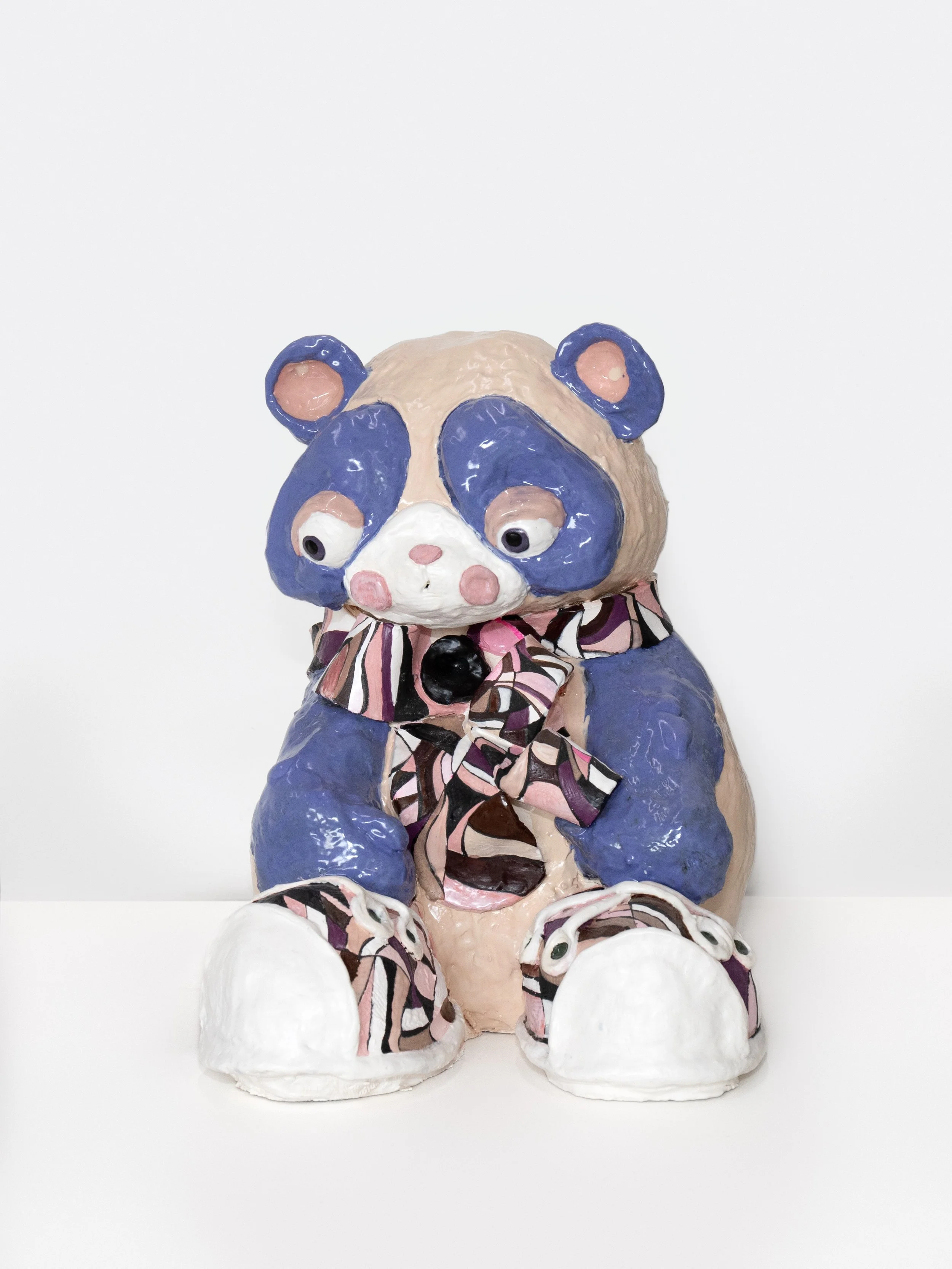
“Fashion is my Passion” Said the Purple Panda in Pucci
ALAKE: I think at the drugstore. They used to sell folders and stuff, and I was just obsessed with the colors, and there was Hello Kitty. Care Bears and Rainbow Bright, those are more eighties too. But I didn't see anything else like that, that was very accessible, kind of on the cheaper side. My mother would probably say it was expensive for stickers and stuff, but could you go to a convenience store now and find anything like that? I don't think so. It was very special to me. It really spoke to me. My mother said she didn't understand why I was so obsessed with it, but I was like, ‘It's unicorns with a rainbow with like luscious flowing hair. Like what are you talking about?’
TRINA: It's like puppies with those adorable eyes.
ALAKE: Yeah. I love stationary too. I used to write a lot of letters to my granny, and I would write letters to friends. When I was raised, growing up, pen pals were very popular, so I became really into stationary, stamps, pens and writing letters to friends. That's like a part of what informed my art practice. Stickers. I was really into stationary.
TRINA: It's so much cooler than email.
ALAKE: Yeah. I could go back.
TRINA: You mentioned Magdalena Frimkess, what other artists inspire you?
ALAKE: Oh, I'll look up my list. I was just starting to make a new list of artists I like.
She takes out her cellphone which has an incredible cover!
TRINA: Oh my God, this phone cover. What is this phone cover about? I don't even understand.
ALAKE: Bailey Hikawa.
TRINA: Wow. I might have to ask you for that link later.
ALAKE: I'll send it to you. She's so good. She makes these in a very small studio. Handmade. I love all things cute things, and it's texture.
Honestly, I know these artists are very controversial these days or people don't like 'em but Jeff Koons and Murakami are really why I started thinking I could pursue art in the first place. My ideal fine art was still lives, the Mona Lisa, portraits of people. I had no wide scope of actually what art was, like Jackson Pollock. When I found out about Murakami and Jeff Koons, I was like, I could do that. Not I could do it better, but I was just like, I could do that. That's something I could do. I saw the balloon, I just felt like, okay, this is it. I will always like them because they really inspired me to figure out how to make paintings.
I like Mike Kelly a lot. I like Kim Price and Katherine Bernhardt, Peter Saul. I like pop artists. The Chicago Imagists, those are my favorite. I wish I could be a part of that scene when it was happening. Claus Oldenberg. He really inspires me a lot. Patrick Caulfield. He's like a pop artist. He's similar to Roy Lichtenstein, but he's a little less famous. He makes great paintings and sculptures. Those are my most favorite artists.
TRINA: I love that you made a list. I've done that with filmmakers.
ALAKE: Yes, because it's hard to remember, because people always ask me, but on the top of my head, my memory is so bad for some reason. I just can't remember, and it's not just artists I like, I want to name artists that actively inspire my work, like I see, and I was like, ‘I wish I made that.’ There's a lot of artists that inspire me, but I don't wish I made the work. But there's a group of artists that I wish I made the work.
TRINA: Let's talk about Made in LA. Congratulations! What was the process like for you? Getting selected, the install and the opening?

Made in L.A. 2025, installation view. Hammer Museum, photo by Sarah Golonka
ALAKE: Well, it's been like a boogeyman hanging over my head. This is probably one of the harder years of art making I've had because it's so much pressure. It's something I think every LA artist wants to do, whether they admit it or not. It's supposed to be your big break, basically, if you're not already established. There's a mix of established artists, emerging artists, all kinds of artists. Some people, I think, it matters more to than others, but it's always a badge of honor. The pressure of making good work for it and just like, oh my gosh, I hope it helps my career in some way because it’s so hard to sustain a life as an artist without another job, which is what I don't want. I don't want another job. I just want to be an artist so I'm kind of at the end of my rope of figuring out how to keep going.
It's been like 10 years, so I have a lot riding on this presentation, and I wanted to do good. I felt a lot of pressure. And the timeline, they give you a year and a half to prepare, but it takes up all of your time, you can't do anything else. All the other projects that you might make money on, take a back seat. I mean, that part is hard.
And working with curators, it's always different. There're always different curators. This is my first time working with curators outside of the gallery. I usually just work with the gallery. I don't work with people that have a vision, a story to tell. They had their own ideas and opinions, and I had rules I had to follow. They had an idea for what they wanted for me that I didn't have any say in really. I appreciate it, but I'm just saying, it was hard because they pushed me to a level that I'm not at yet. I'm not at the level they wanted. It was very hard trying to meet their expectations.
Talking to all these different people, trying to figure out how to get this plan accomplished was very hard. They edit work out, and you're like, oh, what a waste of time, I spent weeks working on this, it's not going to be in the show. That was something I had never experienced before. Usually everything I make goes into whatever I'm making so it always feels like I've spent my time well, but this is the first time where I've had stuff edited out and it was painful because I worked hard on it. But all in all, I think that's a game with museums. I never have worked with a museum in this capacity, so I learned a lot. This was a real learning year. I learned so much stuff about the art world in general, even with galleries I didn't know. That's one of the good things that came out of it, because the art world has a lot of rules and expectations that are not taught to you and are not talked about explicitly. You’re just expected to know, that's been so hard for me because I don't know anything. When you learn things sometimes in the business side, it's through making mistakes and actively being involved in a process. I never had that opportunity, this is my first time. I think I did okay, but I'm excited to see what comes of it.
TRINA: I think it's all a win. You take away what you've learned and what the positive part is.
ALAKE: It's also something I wanted to participate in for seven years. Every year, I wish, I'm like, ‘Please let this be my year. Please let us be my year.’ I have it and I'm really excited.
TRINA: And you managed to have a 25-foot inflatable bear outside crashing into the museum! I read that the Buggy Bear was inspired by you working at the Metro?
ALAKE: I know. I mean, I didn't know that I was so into transportation until actually that interview when the interviewer pointed it out. It's a real full circle moment.

Buggy Bear Crashes Made in L.A., 2025, photo by Sarah Golonka
TRINA: You don't even drive?!
ALAKE: No, I don't drive. But I fantasize about driving. I love trains. There's a huge train hobbyist community. I'm so obsessed with that. People will go home from work and build a whole city. To me that's real magic. That's real whimsical. I like that, what it represents. I do like cars. I like old cars. The VW buggies I just love, that's why I call it Buggy Bear because I love the punch buggies. That game we used to play, big punch buggy! But it's more of the fantasy of freedom, like driving and just going wherever you want. But I don't want the actual responsibility of a car right now.
TRINA: I don't blame you. What did you do at the Metro?
ALAKE: I was an administrative assistant. I worked in a little cubicle with four other people, and I literally went over files, corrected files, organized files of transportation contracts. I didn't do anything important. It was an entry level position, and I was like, I have a choice, I could ride this train to the end. It's the kind of job where you work your way up and people stay there for 35, 40 years. I was like, I could be one of those people and just work my way up and stay here forever or I could quit and pursue art. And I was like, I'm just going to quit and try art, and if it doesn't work, I'll go back, whatever. I'll do something else. But I had to try. It was just very boring. At first, I was excited about it, but the second year I was like, I don't think I could do this for much longer, just sitting in a cubicle all day was so boring.
TRINA: It is boring. What was the Made in LA opening like for you?
ALAKE: This was probably one of the best openings I've experienced because usually I hate openings, they're very anxiety inducing. I don't even go to openings really, unless it's like a friend that I want to support. I'm anti openings. This one was good because this whole year has been so hard that I've been excited for it. But I'm like, it's over. It's finished. I can finally move on so I'm happy for this opening because it's the signal that I'm free. I mean, I didn't stay long. I just went; I got a cool shirt. I tried to wear a nice outfit. I was so happy that I did all the work, that everything got finished, which was so touch and go that I feel like I had a lot of energy. I feel so happy.
But usually there's a deep depression after an opening because I’m like, oh, it's over. It's done. It's happened. Now what? But now I'm like, yeah, it's over! This was a good opening, like a marathon, three days of going there for dinner, talks and openings and they have three openings. It was hard, but not as hard as it has been because my mindset was so different than it usually is.
TRINA: You got to celebrate and take the energy from it to keep going.
ALAKE: Exactly. I feel very positive.
TRINA: I love is your titles. Like Love bug, death match. And, I had a long day. Please bring me a snack. These are great. How do you come up with your titles?
ALAKE: I'm surprised people like them so much because I was almost going to go with Untitled for everything, because it takes a lot of time to think of a good name that you feel really expresses a piece. But it's just really how I feel. I feel like the two ladybugs are fighting to the death for one flower. That's how I feel life is. Everything is such a competition, and it feels like life or death, but in the grand scheme of things, it's really not. That's why on that sculpture, there are other flowers surrounding them, but they're fighting over this one flower. But that's how I feel, I’m the ladybug. That's me. I was like, after a long day, I really wish I had someone to bring me a snack. That's what I really need more than anything, a dang snack that I didn't have to cook, I didn't have to buy. That's what the ladybugs like, just being honest. I would never ask someone to bring me a snack but through my art, I think it's okay. I'm just quiet. I don't ask for what I need, but with these pieces, it's more like I could totally say whatever I'm thinking.
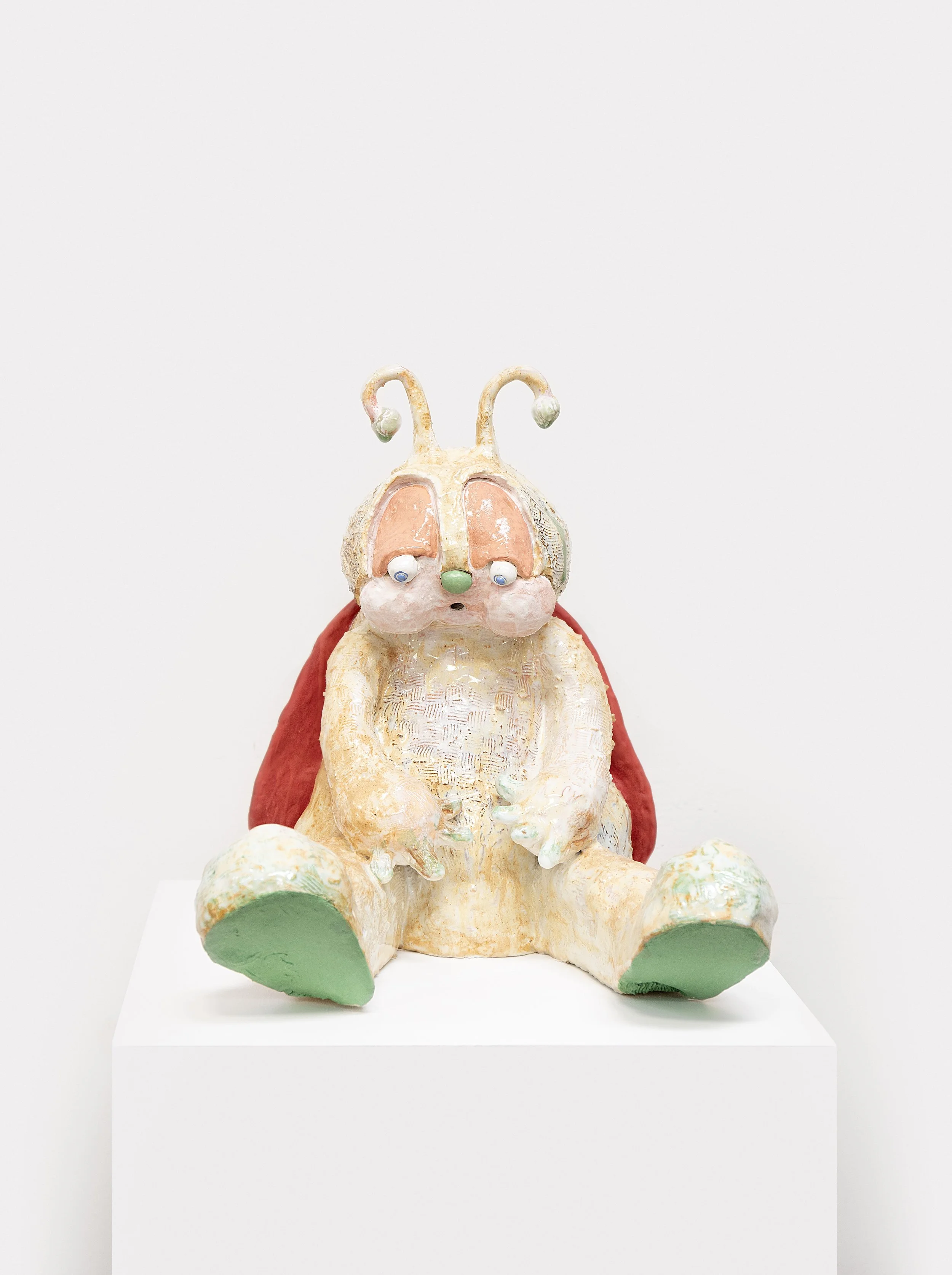
I Had a Long Day Please Bring Me a Snack
TRINA: I love that. I do have a couple fun questions. What's your favorite color?
ALAKE: Pink. I like green too a lot. Pink and green.
TRINA: Ooh. Okay, when I was looking at your pieces, they made me want dessert. Do you have a favorite dessert?
ALAKE: I do love dessert. I was thinking of being a pastry chef when I was younger because they're so pretty and I have such a sweet tooth. I'm always craving something sweet.
TRINA: Me too.
ALAKE: And I would rather eat dessert than dinner sometimes.
TRINA: Me too!
ALAKE: It used to be cheesecake, but now I'm really into donuts, but I'm very particular about them. Have you been to a place called Holey Grail? They make the donuts fresh. They're kind of popular, but they pop 'em in the fire right in front of you right as you order them. You know how donuts sit around sometimes?
TRINA: Usually, yes because they always make them at like four in the morning.
ALAKE: Exactly. I love donuts and I love brownies. I love lava cake. Oh, cinnamon buns. I really like cinnamon buns, but it's hard to find a good one.
TRINA: Yeah. I think the cinnamon bun has been cheapened by some people.
ALAKE: I mean, Cinnabon, don't go there.
TRINA: Totally. Okay. I read a quote from you that I thought was fantastic. It says, “I never felt people really understood how magical I am.” How magical are you?
ALAKE: Well, I didn't know she was going to put that in the article. But I'm not magical, it’s just I feel like people when they meet me, or just everyday kind of interactions think I'm weird or they think I have no value. I feel pretty invisible most of my life. I don't feel like people give me the benefit of the doubt in the sense of, ‘Oh, that's someone I want to get to know.’ I feel some people could navigate life because of their confidence or how they look, or maybe they're good at sports and people assume they have something to offer. But I feel like people look at me and they don't assume anything good or that I have anything to offer. I always feel like I have to earn people over with my sense of humor and I have to do a big song and dance show. I'm a good person. I'm a cool person. I don't feel like people just assume that about me. I could be wrong. This could be my own insecurities, but I feel like I'm just cool as this person, but maybe because I have a funny way of talking, or maybe I wear glasses people assume that I'm not worth their time. That's how I feel.
TRINA: I mean, my feminist gut on that is that because we’re women, we carry that thinking.
ALAKE: Exactly. And I'm not a woman that is good with her feminine power. Like I feel maybe some women feel comfortable wearing their cleavage out or they show their stomach, and they have this power that people can respect. Even if I did feel comfortable in my body, I probably wouldn't do that. But I feel like some women feel comfortable with it, and it gives them some type of attention maybe. We won't get into it. It's a double-edged sword. I feel like I don't have that, as a woman who doesn't have control of her feminine power, really. People are just like, you are just a waste of space.
TRINA: It's hard growing up in LA. I mean, I love LA. I grew up here too. But it's the way women have been depicted in magazines, in TV and on billboards, and the way our world is with the people that move here to become famous.
ALAKE: The culture here is very hyper fixated on how you look, and I've been aware of that since I was a child. It's a problem in America overall, but in LA, between Hollywood and Disneyland, it's a huge problem. People are so obsessed with looks and it's draining when you don't fit into that circle of respect, that you don't fit in the standard of what LA thinks is respectable or worthy. It makes you feel like you have to earn everything and it's exhausting.
TRINA: It's exhausting. I think there's more awareness but it’s also crazier with the Internet. But I do think more people are talking about it more than they ever were before. I prefer desserts and things that are pink and texture and cartoons and magic.
ALAKE: Exactly. That's why I try to create my own world, because it's like, if I just stick in this world, I'm not going to have a good time. I need to make my own world.
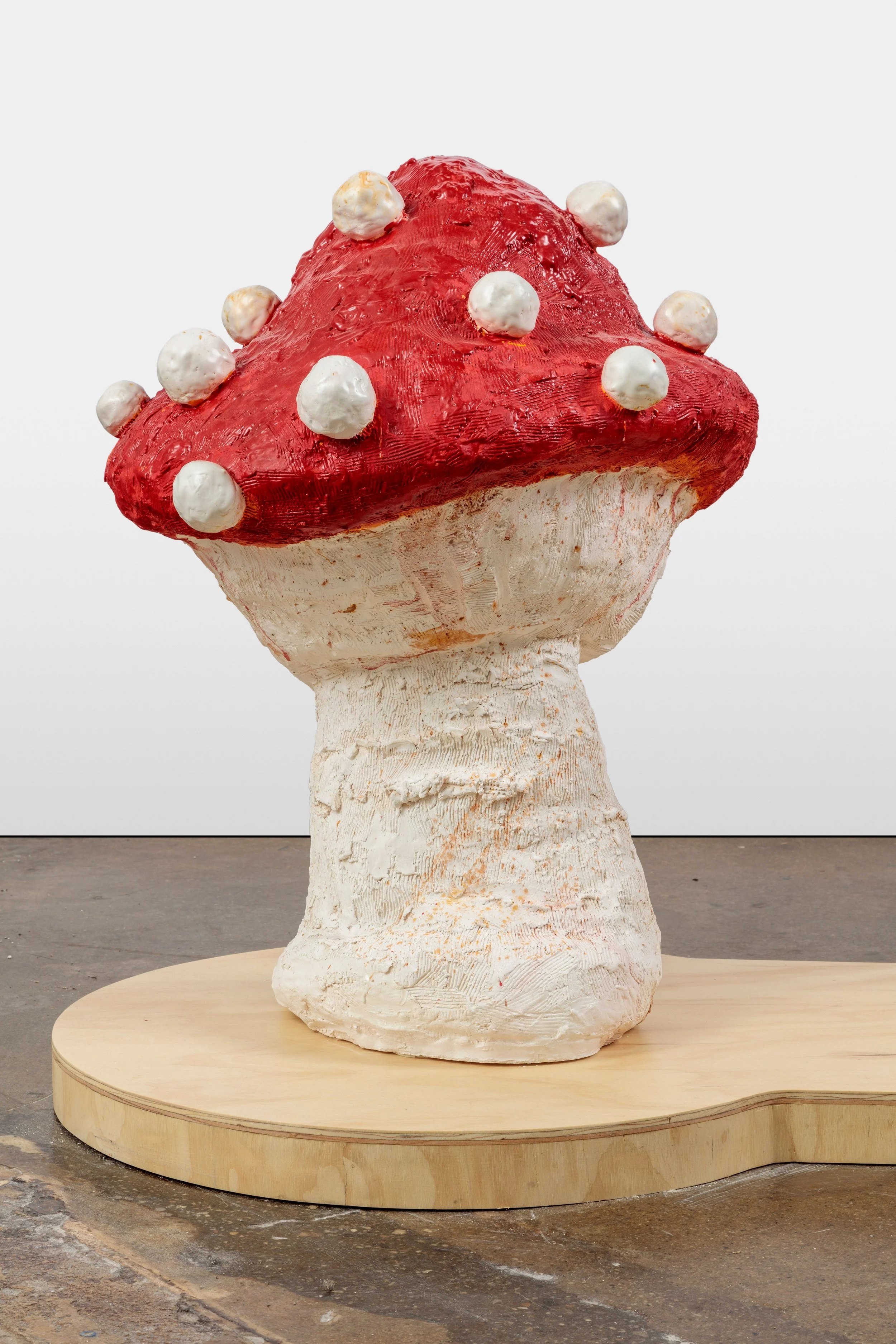
Mushroom #1